In a weekend where I met Perry Farrell and spent 20 minutes talking to Saul Williams, the most interesting interview I got was with the owner of a backpack company. The story of how we met is a lesson in the murky waters of modern marketing theory and the new desire by corporations to portray themselves as green.
Leading up to Lollapalooza, I was bombarded with communiques from various PR firms offering interviews with the lesser-known bands. In the flurry of digital activity, I almost missed a somewhat confusing invite to a pair of events so laden with sponsor names in their titles I couldn't even figure out what they were the first time I read the message. The official titles were "The Music Lounge Presented by Metromix.com at Hard Rock Hotel Chicago for the 2008 Lollapalooza Music Festival" and the related "Eastsport Cafe and Spin Acoustic Stage." This was apparently some sort of VIP event, although the press, including random government employees moonlighting as bloggers, was also welcome. Never having been invited to any kind of VIP shindig before, I decided to check it out, even when I found out that the Hard Rock Hotel was a 20 minute hike from the press tent at Grant Park.
Once on scene, I found controlled chaos on two floors of the Hard Rock. Various cool-looking people in designer garb with three-figure haircuts milled around, listening to music, eating some very appetizing food in the cafe, and--depending on their level of importance in the music world pecking order--being "gifted" (a new verb!) with various goodies ranging from jeans to free tattoos to backpacks, which you could fill with other items you'd been gifted with. The lower floor featured the aforementioned "Eastsport Cafe and Spin Acoustic Stage," which turned out to be a place to get free food and drink and listen to a few live tunes. The whole thing was sponsored very prominently by something called Eastsport Natural and the Ben Jelen Foundation. I had no idea what was going on, except that it seemed to be some sort of mass exercise in branding and consumerism, and that Eastsport was very clearly trying to up its green cred.
The level of branding, in keeping with the overall theme at Lollapalooza (brought to you by AT&T!) was intense. I wanted to follow up on the green angle, so I asked for more info. The Fiji water given to every diner in the cafe (label carefully positioned to face outward) was green, my PR handler assured me, because the company is "carbon negative." The Fuze drinks were green, too, now that they had switched from that environmentally pernicious glass bottle to a new, easier to recycle plastic bottle. Eastsport was the most prominent green corporation there with a new line of green bags to push, with a portion of proceeds benefiting the Ben Jelen foundation. Ben, an up-and-coming singer-songwriter, was promoting his own personal green brand, too, with 6-foot-tall pictures of his face lurking around every corner.
I was ready to call bullshit greenwashing on the whole thing and leave, but the promise of free food and margaritas was too much for me. Plus, it was air-conditioned, and that first day of Lollapalooza was a bit too much like a day in Manchester, TN, to pass up a chance at climate control. I agreed to do a few interviews so I'd have something to keep myself occupied and not feel like too much of a mooch. We arranged that I would come by on the following morning to speak to a few folks. On my arrival, I stood near a tall, muscled man covered in tattoos who looked so much like a slightly younger Henry Rollins that I had to sneak a peek at the back of his neck to make sure that the telltale Rollins barcode wasn't there. Looking for a quiet spot to do interviews, I was directed to the now empty room where the private afterparty concerts were held. The only place to sit was on the stage, so I plugged in my laptop and settled down on a riser.
My first interview was with Bruce Starr of BMF Media, the promotion company that arranged the event. He explained that these VIP rooms give the glitterati a chance to get away from the masses and have a meal in relative peace, and that they were common at events like Sundance but relatively new to the music festival world. This was just one of a series of Eastsport Natural and Spin Acoustic Cafe VIP events being held at music festivals around the country, with others at festivals including SXSW. The camping festivals haven't yet reached this level of cultural importance, apparently, which is why I'd never seen one of these before. And he assured me that this was indeed a very green event, what with the recyclable plastic bottles and carbon neutrality and green backpacks and all.
Next up, I got to spend 20 minutes with Ben Jelen (pronounced yellen). He's a strikingly good-looking man in his mid-20's, with soft features and long black hair. I'm pretty sure that this is what Michael Jackson wanted to end up looking like, even though it didn't quite work out that way. He's also a lot smarter than the blog posts on his foundation's website let on. After reading his exclamation-point laden missives about compressed-air cars and the benefits of organic gardening, I hadn't really expected a mature conversation, but it turns out that he's got a degree in biology from Rutgers and knows his environmental stuff backwards and forwards. This is not a guy who's jumping on the green bandwagon, or a guy who's greenwashing. Instead, he's an astute marketer and a bit of a realist. In his own words, "I think the most important things are the consumer vote. Where you put your money in a capitalist society is going to speak loud and clear as to what you want and where you're going."
To further his desire to see the world become a better place, Ben puts his capitalist money where his mouth is. It started a few years ago, when he had early financial success with his first album. He gave a chunk of change to the NRDC, enough that they took notice and had some conversations with him. Perhaps inspired by that, he started the Ben Jelen Foundation in January of this year, with a four-point approach (education, lobbying, humanitarian relief, and investments in clean energy) that he hopes will approach the whole problem. So far, the young foundation has only raised about $12,000, but he's also partnered with Fiji water to send about a dozen New York youth to Fiji for some first-hand environmental live-and-learn activities, and he has the new partnership with Eastsport Natural, which is donating 10% of its proceeds to his foundation. Color me suitably impressed. I was beginning to get the impression that this event wasn't just so much greenwashing after all, despite the celebrity hoo-hahs and the suspect claims of carbon neutrality from Fiji water and the questionable green cred of Fuze's new plastic bottles.
But none of this really explained the Eastsport backpack connection to me. Why was a low-end bag manufacturer with 50-foot displays at every Wal-Mart in the country wrapping itself in green, and what do $20 backpacks have to do with rock music? I was assured that my final interview with the "Eastsport rep" would clear things up. As I sat there on the stage where Sharon Jones had given a private VIP-only show the night before, now my private interview room, I pulled together a few questions.
Ben Jelen (in hat) and Joseph Janus.
None of these questions ended up getting asked, though, because when I met the Eastsport "rep," I was more than a little surprised by who showed up. My interviewee was Joseph Janus, the Rollins lookalike I'd been standing next to earlier, and he wasn't a sales rep, he was the principal of the company. Beyond that, he's also the man behind Fearless Management, the artist management firm responsible for getting Ben Jelen signed on to Madonna's Maverick record label. All of a sudden, the dots started to connect.
Janus has a classic American success story. He skipped high school entirely to skateboard, but after an injury at the tender age of 13 he started JMCO, a successful blue jeans company. He eventually sold that and continued on in the world of fashion and marketing with stints at Calvin Klein and Guess. Along the way, he also picked up the Eastsport backpack company from its founder, and now the company is the number one backpack manufacturer in the world, according to Janus. But there's a problem with his manufacturing business, and he knows it: Eastsport's current manufacturing process just isn't sustainable. He's blunt about the issue: "This is a company that makes...affordable plastic backpacks...we ship like 800 million backpacks. Now, the problem with that is how do you get 800 million people to go from buying a $24 backpack to a $50 or $60 backpack? It's very difficult to be green."
But just because it's difficult, or perhaps because it's difficult, Janus hasn't given up or given in to the greenwashing I originally suspected him of. He's researched the issues thoroughly and is determined to be a part of the solution the best way he knows how--through marketing and consumer education. But after a career as a marketer, he didn't want to fall into any ethical traps. "You'll see things that are marketed as 100% organic cotton, but with the lining and the filler and everything else, it's actually 20% organic cotton. It's a big lie and it's a big marketing ploy and I didn't want to do that with Eastsport," he states defiantly. He continues on to say that "what we decided to do was come up with a line of backpacks that instead of being $19.99 or $24....was 100% biodegradable. I didn't worry about organic, because organic is not what's important [ed. because of the lack of regulations surrounding "organic" labeling]. What's important is biodegradable [and] where are these backpacks being made. They're not being made in China, they're made in the US. They're being shipped local to source. They're going into warehousing that's close to that district. I really went 100% in a way that would make this as environmentally friendly as possible, with telling the truth and not using it as a marketing ploy."
Janus, like the young environmentalist Ben Jelen whose career he helped launch, is passionate about the environment but also a realist. As he puts it, "I would love to be in a position where I could say we only make natural backpacks. That'd be great. But I'd be out of business." So Janus, the skateboarder/fashion designer/music manager/green backpack manufacturer, is breaking all the rules, seeking out biodegradable plastics manufacturers, bringing manufacturing back to the US, and trying to spur demand for green manufacturing components to a level where economies of scale can kick in and these products can be cost-competitive with more traditional ones. Right now, it's a losing proposition, financially speaking. He says that after donations to the Ben Jelen Foundation, investments in alternative energy in China, and the added expense of green components for his bags, his company doesn't make any money on the Eastsport Natural line even though it has a price tag that's 2-5 times as much as his plastic backpacks. "Because," he says, "the big, ugly story of green is how affordable is it?"
And that's the crux of this weekend. Lollapalooza is capitalism in all its ugly glory, rock and roll devoid of sex or drugs, a money-making machine as sinful and sanitized and finely tuned as the new Vegas. The festival, despite what appears to be a heartfelt desire by top management to be greener, is still all business. The stages are sponsored by MySpace and Bud Light, the entire event is underwritten by a phone company, even the green area is sponsored by Whole Foods. Despite the fact that the 3-day event cleared almost $10 million in 2007, according to Spin, any greening has to pay for itself, with the result that it's hard to tell if the festival is green or greenwashed. With a finely-honed cash cow like this, no one is taking any chances. But we need risk-takers to get out of the business-as-usual mentality, and in the vacuum of leadership from above, it's entrepreneurs like Janus who are taking charge. Eastsport, surprisingly enough, is taking a flier on the green line of bags. This isn't greenwashing, this is an entirely earnest experiment, one that combines the marketing of a young new environmentalist filling a void--the complete dearth of musicians not named Michael Franti willing to tackle the environment in their art--with the marketing of a new product line that isn't making any money, all in the hopes that the two of them together can convince consumers to go green and stay green, not just give in to green marketing.
Janus wraps up with some optimistic thoughts. "What I'm hoping is that the consumer starts wanting green products. If the demand is there, then I have to make more green backpacks and I have to find a way to make them less expensive. I can't wait for that to happen....I'm very interested in seeing a healthy planet become a reality." Let's hope he succeeds, and that he can stay true to his vision of a green product that lives up to its marketing. And as for the "carbon-negative" water...well, I'll leave that for another day.
Full disclosure: I was offered a bag, and agreed to take it, but they were all gifted out so I left empty-handed. That said, we're probably going to be giving some of the new Eastsport Green bags away on the site in the near future.
Even though I'm still working on transcribing the last of my Rothbury interviews, it's time to switch gears and move up to Lollapalooza. I'm lucky enough to be onsite all weekend, and can't wait to see Radiohead and Rage Against the Machine. I'm also looking forward to checking out all the green accomplishments at the festival and digging deep to see if they live up to the hype.
Lollapalooza's had years and years to perfect its act, so I expect things to go pretty smoothly here. They have an extensive greening section on their website that gives info on the various greening initiatives around the site.
Notably, the new permanent location at Grant Park in Chicago is exceedingly public transit friendly, and it's also going to be bike friendly with a bike storage area and even a bag valet for folks using public transit/bikes to drop off their extra gear. There are two free water locations in the park and fans are encouraged to bring reusable bottles, and of course there is a full-fledged recycling program. At first glance, it looks like Lolla is at about the same green level as Bonnaroo--in other words, they were in front of the pack until Rothbury came along and blew away the competition.
Lollapalooza's frontman Perry Ferrell is known to be big on the green front, and I've managed to snag 5 minutes with him on Saturday for an interview. I'm also working on lining up a talk (or even a behind-the-scenes tour!) with Stacy Rodriguez, the new greening coordinator at C3. On the artist front, I'll be interviewing Saul Williams and others, so stay tuned for lots of good green info in the weeks to come.
One notable interview I won't be able to get is, of course, Radiohead. Getting an interview with Thom Yorke is about as easy as getting an audience with the Queen, but I tried anyway. That doesn't mean I won't try to sneak my way backstage for a look at the ultracool low-energy, battery-powered LED lightshow that the band's production manager devised just for this tour. Radiohead has done as much as anyone to green their tour, and they've been very transparent about the process on their website and blogs, so I'll dedicate a whole post to the band after the dust settles.
There are better clips of Radiohead on YouTube from a musical performance and audio quality perspective, but this is the best example I could find that highlights the LED show. Enjoy!
Get your mind out of the gutter. The "it" in the headline that Susan Tedeschi, currently on tour with her husband and bandmate Derek Trucks, is talking about is saving the planet. This is a family blog! But it's a great title, don't you think? Maybe if we're lucky, she'll make it the title of her next song.
Susan told me that it was time to stop talking about the planet and start doing something about it during a long, forthright, and at times very passionate interview at Rothbury on July 5. She doesn't pull any punches, and as you'll see, she tries very hard to practice what she preaches, setting up recycling stations on the tour bus, getting her home off the grid, and leading the charge for biodiesel on her tour. What she lacks in a sophisticated green touring campaign she more than makes up for in enthusiasm.
In fact, Susan's so excited about green stuff that before I could even get my first question out, she jumped in to tell me about her solar-powered home, which she shares with Derek and her two children. And when I tried to wrap things up, thinking she must be tired of talking, she turned the tables on me, asking me questions about how she could improve her touring practices. I'm still swooning!
Susan and Derek getting it on.
Susan Tedeschi: Derek and I have a solar powered home now.
Jason Turgeon: Excellent! Well, tell me about it.
ST: Derek actually is the one that knows. We looked at a bunch of different companies, but he's the one who ended up deciding because I had to go out of town. They came and they put 22 panels on the roof, at 31 degrees.
JT: Fantastic. Where is this in Florida?
ST: Jacksonville.
JT: Is it off the grid, or partially solar powered?
ST: It's tied in to the grid, so we use what we need, and the town puts it in a bank, so...
JT: So, it provides more power than you need?
ST: Yeah.
JT: Fantastic. So how about your touring--have you been doing any green touring?
ST: We have been doing a lot of discussing about it. The problem is having 23 people on tour on these buses and not having space. A lot of these buses are already pre-organized, the way the trashcan is or whatever. Our new idea is that we have a couple of drawers at the front, and I'm trying to turn those into recycle drawers. The one thing that drives me nuts more than anything on the road is water bottles and people just throwing them in the trash. Drives me nuts. I'm like, no, we're not doing that. We're putting them in the drawer, and then we're putting them in the [recycling bin]!
JT: Have you guys thought about doing the Rothbury thing where they just took away the water bottles and everyone has to bring a Nalgene?
ST: Well, we would, but we don't have time to go shopping, so people wouldn't be able to drink. You have to have water. But something else I've been thinking about is how to do biodiesel for the buses. I'm friends with Willie Nelson and his wife. Annie is really big on biodiesel. She has it for all her cars and for the tour bus. And I know Dave Mathews does, too, because I do Farm Aid with those guys. Every little bit, though, helps, anything.
JT: [Your publicist] told me that you were interested in Florida rivers.
ST: Yeah, the watersheds. I grew up in Massachusetts, and I was always part of the North River, that was the watershed [group] that I was always involved with and doing work with. And I've been getting involved with the St. John's Riverkeeper, and trying to keep that river healthy and trying to do whatever we can. Trying to write letters to everybody, mostly senators.
JT: Have you done any benefits?
ST: I have, I've done some benefits at the Cummer Museum in Jacksonville for [St. Johns Riverkeeper]. They have an oyster festival that I have done a few years. I'm trying to get more involved in it, I'm just really not home at all. I've been so busy, I haven't been home. But Derek and I have always been so curious about environmental things, always trying to look into it, that we've inspired his little sister to actually get on the phone and write letters to everybody from the mayor and governor as well as to the TV stations. She's trying to get all the public schools to recycle and also Alltel stadium, [which] doesn't recycle. So we're working on it.
JT: Have you worked with any of your other venues to get them to try and recycle?
ST: A lot of them actually have been. A lot of the venues are, and if we mention [that a venue doesn't recycle], then we'll get a trash can together and people at least start to try.
JT: Do you get a different kind of fan at your [solo shows] than you do in the festivals? Are they more of a traditional blues fan?
ST: Yeah.
JT: Are they into this stuff the same way that [this audience] is?
ST: Not as hip as the college kids or the younger kids.
JT: If you try to bring it up are they receptive to it?
ST: Some of them are, and some of them get all weird on me. "Why are you spreading your politics on me?" I get that a lot. Whenever I start talking about how we need to save the environment or be more aware. If everyone would take care of their own backyard, we wouldn't have all these problems. I try to get people to read Rachel Carson books. I'll turn 'em on to whatever I can. It's funny how people will try to label you all of a sudden, like "communist"...You're talking about things that are important and good for the planet.
JT: It sounds like you get a lot of resistance. Is it a generational thing or a regional thing?
ST: I do [get resistance]. It tends to be generational, I've noticed. It tends to be sixty and older, they're more set in their ways.
JT: So the message hasn't really sunk in.
ST: They don't believe in it. They don't think that global warming exists, they have their own arguments. It's just a different way of thinking, and I feel like I'm always trying to go up against these people that just aren't open-minded enough to it.
JT: What about when you tour with the Allman Brothers and those folks?
ST: Oh yeah, it's way easier. You know, the Grateful Dead and the Allman Brothers, they've been out pushing for these causes for 35 years. When I was out with the Dead, I remember one day [Bill] Kreutzmann [said] we've worked 30 years to get these things in place and George Bush comes in and in 2 years knocks out all the work we've done.
JT: Sometimes things have to get worse before they can get better. Sometimes that's how you get to the people who wouldn't believe it if it wasn't...
ST: Yeah, but all the way worse? Give me a break! But you're right. Some of the people who used to give me a hard time, now they're at least not...
JT: Would you say that the tide is starting to turn?
ST: I would, especially because of the George Bush years (laughing). I think that has made people rethink things.
JT: In your songs, do you have any kind of environmental message?
ST: Big time. I don't know if all of my songs are going on my record or not, because I've written a lot of songs. One song is called "Until the Earth Runs Dry." That's a song about everybody wanting it, always having it, needing it, but then all of a sudden in our life, in our generation, it's not always going to be there and it's not always affordable. Whether it's oil or water. It's one of those kind of songs. A lot of my songs are kind of political. One is called "Pack our Things and Go." It's about packing up our troops and having 'em come home and trying to take care of our own country.
JT: That's courageous. You're out there pushing that stuff even though your fans have said they don't want to hear it.
ST: Yeah, they don't want to hear it. I don't care. I have another song called "People." It's about people having a choice. One of the verses is "TV screens/corrupt magazines/a man on the radio who thinks he knows what you need/planting seeds/that just mislead/that can't be taken back." Because you have all these people that plant seeds in your head, and people start believing it. And it's not factual. You can't believe everything you read, unfortunately. You have to know who you're dealing with, what your source is. But people aren't even educated enough to know who to vote for.
JT: Do you do any stuff with Headcount or any of those groups?
ST: We used to do the Rock the Vote. We used to say come on and come to our shows and set up a table. Anybody environmental or trying to educate people to vote, that's all good.
JT: How about this festival, what do you think?
ST: I was so impressed, because when I went to catering, [they had] the utensils I love! They have the ones that are compostable, and everything was pretty much compostable or organic. It seemed like they had put thought into everything.
JT: Was that a consideration when you were booking this festival?
ST: I always want to be part of festivals like this, absolutely.
JT: Is Derek on the same page?
ST: Oh, big time. He's always picking on me, like, "OK miss environmental, you left a light on!" He's really big on making me practice what I preach. He doesn't let me get away with anything. Which is good, I like it.
JT: Anything else green you wanted to talk about?
ST: Well, I always have four or five [reusable bags] clipped onto my pocketbook. Look at China, they don't have plastic bags anymore, for a reason. I think it's good for us to be aware, but it's more important for us to actually start putting it into action. Once you start learning about what's good and what's not, let's do it. Let's stop talking about it. Let's get on it!
JT: What's the one thing you're not able to do right now that you wish you could?
ST: In my touring habits, I wish the trash, everything from the utensils--I wish we could get those on the riders. The problem is, we have to get whatever people have in their town. It would be way cooler if we could just [buy in bulk], but there's no room to store it. It would be cool if we could actually get some of those earth-friendly products in every town. I would really love it if we could make all the festivals like [Rothbury]. Some of the artists like Dave Matthews that have a big enough draw, they can make a difference if they start asking for it. It would be good if it was made more mandatory by the artists.
JT: So I think that's it.
ST: Well what can we do, as artists, to help?
JT: Keep putting the message out there. You have a lot of influence with people. Especially, you deal with an audience that's not used to it, you're not preaching to the choir. So if you can find a way to get through to them without upsetting them...it doesn't have to be a left wing/right wing thing. We all have to live on this planet.
ST: I try to move them.
JT: And if you can demonstrate things...if you do a show with refillable water bottles and a five gallon jug, and people see that you're not throwing away water bottles, even if they don't know it, you're having an influence on them.
ST: I have a jug that we got from Montana. Maybe we could get some for the whole band and we could do that.
Let's hope that next time you see Susan, she's got the whole crew switched over to refillable bottles. But even if she doesn't, make sure you see her--she puts on a great show! Here she is, belting out "Hey Jude" at their Rothbury set.
A press release touting "Boston's First Carbon Neutral Concert," whatever that means, popped into my inbox yesterday. It's a free show tomorrow at 7 by the Boston Landmarks Orchestra, one of only two professional orchestras in the country that dedicate themselves to entirely free concerts. I didn't even know Boston hadtwo orchestras. There is apparently some kind of environmental fair beforehand, which from the list of collaborators looks like it will be focused on water quality, not global warming. Anyway, it's a free show at the Hatch, if you're into some jamband music of a different kind. Debussy, anyone?
In my last post, I drew some parallels between Rothbury and Bonnaroo. That was fun, but let's get to the point--what did Sarah and the gang actually do to make this festival so green? Follow me on a behind the scenes tour through the festival as we dig deep and dig dirty into the nuts and bolts of setting up a temporary city in a green fashion.
Rothbury's attendance came out at somewhere around 35,000-40,000, roughly the same size as Burlington, VT, so it's not a stretch when I say that this really is a temporary city. And just like any other city, festival organizers have to deal with real city issues: waste management, providing clean drinking water and decent sanitation services, community relations with neighboring municipalities, transportation issues, and so on. At Rothbury, they also took on the decidedly city-like tasks of education and public art. We'll cover each of these issues one-by-one in this post. Ready? Let's go!
Transportation: Getting There
One of the problems of a camping festival is that it's pretty hard to find a site that's easily accessible on any kind of decent public transportation. By and large, people drive to these things, with the exception of us uber-polluters who really burn some carbon and fly there. I flew in, feeling vaguely guilty about my vastly inflated carbon footprint, but at least I was able to catch the shuttle offered by Mr. Busdriver and come in car-free.
Mr. Busdriver is a relatively new service, run by a frenetic but cheerful madman named Rick. He's going after the festival market in a big way by organizing bus transportation to and from these festivals. I got to meet him at the festival and he's an all around good guy, but he seemed frighteningly disorganized at times. I think all 7 of us on the special van he chartered to pick up the stragglers at the airport got 4 or 5 phone calls and emails from him in the days before the festival and on our arrival day itself. But he managed to keep it all together and after a 90-minute wait at the airport we got in our van. The driver he hired was good enough to stop at a local grocery store so we could buy some essentials before we got sequestered into the land of expensive festival general stores, so I was able to load up on PBR and cheap gin. In comparison to the nightmarish ride I had in to Langerado, this was pure luxury. I just hope that next time around, he's a little bit more organized.
Our ride in was fast and traffic-free, and as promised we ended up at a special back entrance close to the main gate. Things briefly fell apart there, though. By now it was 9:30, a full 4.5 hours after I'd arrived at the airport 75 miles away, and all of us were anxious to get into the festival. But for some reason, security wouldn't let us in, so we had to cool our heels in the parking lot of a nearby school while Rick frantically negotiated with the guards. Eventually, a compromise was reached, and we were allowed to walk through the gates. This meant unloading all of our bags and groceries, walking through security, and loading our gear back up into a separate van on the other side of the gates for a brief ride to car-free camping.
Once there, we were informed that we would need to be on a 7AM shuttle bus on the way out Monday morning, even though most of us had afternoon flights. Apparently, the 10AM bus had sold out, but at this point we all just wanted to get in. Car-free camping turned out to be great, a beautiful lawn just a 3-minute walk from the main gate and near the general store and merch tents, with a lightly-used (hence always clean) bank of well-lit portapotties right next to us and showers and water station a few minutes beyond.
It's worth mentioning that the organizers planted grass on hundreds of acres of camping areas and on the festival grounds themselves to make things more comfortable for us, and it's a good thing, too. Before we arrived, there were several inches of rain, but there were only a couple of muddy spots. Compared to Phish's IT and Coventry festivals and Bonnaroo 2004, all muddy disasters, this was a fantastic experience.
Of the people I talked to who drove in, not one had any complaints of significant traffic jams on the way in. That's not just a fan-pleaser, but an environmentally good thing. Having thousands of fans sit in traffic for 6 or more hours, as seems to be the case at most festivals, is a huge waste of fuel and a terrible thing for local air quality, never mind the CO2.
Speaking of CO2, the festival offered fans the chance to offset their CO2 in transit for a paltry $3 via the Bonneville Environmental Foundation, with an upgrade to a $7 package that also supported a very large solar project on the school where we cooled our heels. A nice touch was that we could buy these offsets on site if we didn't do it when we purchased tickets. Since my ticket was comped by the festival, this gave me a way to offset my own travel. Organizers reported that about 20% of the fans chose to offset, a huge number in the world of offsets, and the vast majority of those contributed to the school's solar panels.
So what went right and what went wrong with transportation? Well, the lack of traffic jams was a huge plus, although I'm not sure whether to credit this to the size of the crowd or the organizers. The push for offsets and the ease of buying them was also a good thing. Organizers went to great lengths to get people out of their cars and promote carpooling, offering incentives like the fantastic car-free camping and options like Mr. Busdriver. On the down side, the interface between Mr. Busdriver and the festival was poorly done. It's to the festival's benefit to get more people to come in by bus, so they need to better integrate ordering bus tickets into the Rothbury website, work with Rick to set up a schedule of bus service that makes sense and help him fill as many buses as possible, and most importantly make sure that nothing like our horrible welcome by security ever happens again.
The festival also needs to pick one carpooling partner and funnel all the ridesharing to that central location. Pickuppal.com is making a play to be the music-related rideshare organization of choice, but when I spoke with management there, they told me that Rothbury had declined an offer to go exclusive with them because of perceived liability issues. Pickuppal is the official rideshare partner of both Dave Matthews and John Mayer, so it would have made sense to use the service for Rothbury instead of directing us to no fewer than 10 rideshare sites, ensuring that no one site got a critical mass going.
To finish on a more positive note, the festival did a good job of partnering with Amtrak and the local ferry services, and it would be really wonderful to see them expand and better promote these in future years. With some sources predicting $7 a gallon gas by next summer, anything Rothbury can do to help customers get to the site will be sure to pay back with increased attendance.
Waste Management
Rothbury really shined when it came to taking out the trash, mostly by doing everything they could to make sure there wasn't nearly as much trash in the first place. A crew of more than 500 volunteers manned hundreds of waste stations, each with three different-colored bins for compost, recyclables, and landfill.
A volunteer hard at work manning the waste stations.
The volunteers were there to make sure that patrons knew which bins to use for things that might not normally be associated with compost. Every vendor was required to purchase compostable cups made from corn, compostable plates made from wheat, and compostable silverware made from rice. All of the beer was either draft or served in aluminum bottles (and by the way, having a couple of non-Bud options was a well-received plus). There were at least 3 or 4 sources of free water in the grounds and patrons were encouraged to bring refillable water bottles. Those of us who chose to purchase $3 bottles of water were served Earth Water, which gives 100% of profits to the UN Refugee Agency to provide clean drinking water to the developing world. And outside of food and beverage items, what is there really to dispose of inside the festival gates?
As the picture above indicates, the volunteers manning the bins looked pretty bored most of the time because organizers made sure from the get-go that everyone knew the deal. The back of the folded festival guide/map, which was itself far smaller than the books given out at other festivals and presumably printed on postconsumer recycled paper, was entirely devoted to a simple graph detailing what belonged in each bin, and once people had been gently instructed by the first volunteer what they should do, they pretty much got it.
All this attention to managing waste paid off, as Sarah gleefully announced a diversion rate of more than 80% at a press conference dedicated to the green aspects of the festival. When we visited the waste collection area the next day, this was down slightly to 73%. Sarah explained that as they moved between waste collection in the campgrounds and the festival grounds, the figure fluctuated but that they were hoping to end up with over 80% of the waste diverted. Speaking of campground waste, the festival collected all of the discarded tents, coolers, shoes, and anything else of value and donated them to local charities instead of tossing them.
While the volunteers manning the waste stations were happily underworked, the volunteers behind the scenes at the waste station couldn't make any such claims. When a small army of journalists showed up in golf carts to check out composting in action, we found about 10 very industrious volunteers laboriously sorting the contents of every bag of trash, recycling, and compost to make sure that everything ended up in the right pile. The workers seemed to be in high spirits, with Phish blaring from a boombox and once-per-shift cash prizes given to the lucky winner who found the most unusual or humorous piece of refuse. One thing that surprised me was that the compost pile didn't smell nearly as bad as I expected it would, although it certainly wouldn't have passed for perfume. Unfortunately, we were too early to see the giant grinder Sarah had commissioned to mulch the compost arrive to perform its work.
Sarah Haynes in front of the compost pile, holding a bottle of Earth water.
Even the bags that held the compost are biodegradable!
Perhaps the best part about all of this was that the festival grounds were always spotless after fans left. People really seemed to get into the spirit, and there were far fewer discarded water bottles and cups than I've come to expect at the end of most sets. I even had a volunteer walk up to me while I was chatting with one of the festival artists after a set and relieve me of a beer cup I'd been planning to compost later. The crew at Madison House told me that they needed far fewer people to clean up after each set than at other festivals--as few as 7 in one instance, compared to perhaps 150 at a similar event elsewhere. And it showed--in the picture below, you won't see anything at all, not a cup or bottle or even a bottle cap. The organizers even handed out matchbox-sized personal ashtrays, which while certainly not 100% effective might have helped a bit.
Not a speck of trash!
So what went right and what went wrong? This is an easy one--waste collection and diversion was the festival's most visible and obvious success. The only hiccup I found was that we weren't given either trash bags or recycling bags when we entered the festival, although that might have been related to the whole snafu when we entered the festival.
Water and Sanitation
One of the things that can make or break a festival is adequate drinking water and decent restroom facilities. The water stations at this year's Langerado were abysmal on the one occasion when I could actually find water, and the toilets at the 2004 Bonnaroo were among the most disgusting things I've ever witnessed in a long and depraved career, Fear Factor times 10 (the toilets at last year's Bonnaroo were much improved).
So I was very pleased to see that the water stations in the campgrounds seemed to be well laid out. They used the shipping container approach that Bonnaroo pioneered, with trough sinks and a floor to keep you out of the mud, and all the water going to a big frac tank. Showers, reportedly sometimes hot, could be had for $10 with very short lines, and there were a smattering of free water stations inside the festival gates.
The restrooms, standard plastic portolets, were in general as clean as I've seen them at any festival, although we were a bit spoiled by our underused car-free camping restrooms. Some of the restrooms even had mirrors and a shelf for your beer! I can't recall waiting more than one minute for a restroom at any point during the weekend, and by and large the restrooms were located under a light source, one of those simple but often-overlooked touches that really helps keep the filth quotient down.
All in all, the festival did a nice job with these essentials. What went right? Good water services in the campgrounds, free water refills in the festival, and clean and numerous toilets. I can't say anything went wrong, but I'd really like to see the festival break new ground in the US festival scene and push for some really nice compostingtoilets. I'd also like to see a sink of some sort outside some of the larger banks of restrooms for handwashing, or at least a tub of antibacterial gel. I'd also like to see a few more drinking water stations scattered around the festival grounds.
Feeding the Masses
What would a festival be without Spicy Pie? The food here was more of the same--$10 burritos, $5 slices, and so on, but I can't really complain. It was hot and fresh and to be honest, I really do love Spicy Pie.
Anna Whalen lovin' the pie.
But still, I was hoping for more. After all, we were promised Michigan's largest organic Farmers' Market! And while there was, it's true, a farmers' market, it was tucked off in an out of the way corner, behind the ecovillage and well off the beaten path. Some of the farmers seemed a little non-plussed by their location. After talking to Madison House staff, it seems that two factors contributed to the situation. First, they had to reconfigure the main gates after heavy rains the day before the show opened, and this left the market out of the original flow of traffic. Second, this was the first festival experience for most of the farmers, who didn't want to stay later than perhaps 11:30 PM. This meant that they had to group the farmers' booths in a place where it wouldn't look like the festival was closing up shop early--no one wants to walk by a bunch of tarped up booths during a 24-hour party.
The real disappointment was that the farmers brought stuff that might make sense at a normal farmers' market--things like loaves of fresh bread, quarts of fresh strawberries, and blocks of cheese. But they were located INSIDE the festival grounds, not in the campgrounds. What on earth is a person about to spend six or eight hours bouncing around from Thievery Corporation to Michael Franti to Primus to Dave Matthews (I know, they didn't play in that order) supposed to do with a quart of strawberries or some raw milk cheese that needs immediate refrigeration? I was begging for a really delicious sandwich made from fresh local ingredients, but all I got were instructions to buy a loaf of bread, a round of cheese, and some meat and make my own sandwich. Not exactly what I had in mind.
About the only portable food at the farmers' market.
In the general store, which I had been assured would have all of my camping needs and plenty more at prices below that of Whole Foods, I found dozens of loaves of fresh, locally made "English Muffin Bread" for $5 each, along with (glass) jars of jam from a local purveyor, also for $5. Unfortunately, the bread was all marked "best when toasted," and I'm guessing that even in RV-Land, there weren't many toasters to be found here. Otherwise, prices were a bit higher than I'd been promised--$2 for an apple or banana on the first day (later marked down to $1), $3 for a bag of ice, and so on. But they weren't too far out of line, and they also had locals in the general store serving what looked like really good coffee to appreciative caffeine-freaks.
So what went right and what went wrong? Well, we didn't starve, and they never ran out of spicy pie. But I had hoped for much better integration of the farmers' market, and slightly lower prices in the general store. Chalk it up to inexperience on the part of the farmers and first-year jitters. Hopefully, next year farmers will get the message that they should have portable food, like sandwiches, ready for our consumption and be ready to stay late or partner with other vendors who are already planning on all-night service. Another option might be to move the market out to the campgrounds and integrate it into the general store. All in all, a great idea that I hope to see again, but one that needs a bit more polish to be fully functional.
Education
One of the most important things a festival like this can do is introduce green concepts to the masses. Demystifying green issues like composting or solar power can go a long way to fostering change in the public at large. Unfortunately, most festivals have relegated their green efforts to poorly done "green villages" filled with leftover hippies and other sixties burnouts selling patchouli and handing out photocopied fliers railing against the evils of cell phones. Maybe you make a tour through the green area, sign a petition, get preached to a bit, and move on to have some fun, but that's about the extent of it.
Rothbury, on the other hand, took its educational opportunities to heart. Sure there was something of an ecovillage, with info on solar panels, a biodiesel powered school bus, and a bookstore run by the most excellent Better World Books selling books on climate change. But there was nary a hippie to be seen in the ecovillage, and hip organizations like RVL7 selling some pretty fashionable t-shirts kept people engaged. As far as ecovillages go, it wasn't bad.
But my problem with ecovillages -- even good ones like this -- is that they marginalize the green movement. If we're going to get this whole sustainability thing down, we're going to need a lot more integration into the mainstream. And that's where Rothbury really ramped things up. After all, it billed itself as a "party with a purpose." It's not like fans didn't arrive knowing they were going to be expected to think about sustainability for at least a few minutes. And Rothbury did a good job of trying to expand the boundaries of what a fun weekend could be with lots of intimate Think Tank sessions. These sessions, curated by Dr. Steven Schneider, one of the IPCC Nobel laureates, covered a really broad array of topics and all involved at least one of the musicians performing at the festival. It was somewhat incongruous to see Hunter Lovins of Natural Capitalism fame sharing a stage with Ken Jordan from the Crystal Method, but it somehow worked. All of the seats at the event I attended were full, and the audience seemed interested and was asking some good questions when I ran off to get to my next show.
Award-winning journalist Bud Ward and Ken Jordan of the Crystal Method
But that was the problem--as interesting as the Think Tank sessions looked, they were up against some top quality music, music that people had paid hundreds of dollars and travelled thousands of miles to see. Even a dedicated greenie like me could only find time to attend two of the events during the weekend, partly because the sheer size of the festival grounds made it impractical to keep bouncing back to the venue at the main gate where many of the Think Tank events were held. So as sincere as the effort was, I'm not sure how much difference it made. Still, kudos to the organizers for going with a risky idea--lectures at a music festival? -- and for getting some really top-notch names to participate.
One area that seemed more successful was in artist education. All of the Think Tank sets had at least one musician, which speaks to the level of commitment that many of these performers on the festival circuit have for the environment. And in my conversations with artists backstage, every single one of them was happy to be part of a festival that was promoting a good social cause. I could see the lightbulbs going off for some artists when I was asking them about greening their tours, while other artists seemed really relieved that a festival organizer was finally getting to their level of thinking on these issues. At the end of the day, artists will have far more sway with the general public than organizers at a festival, so it was really heartening to see such a positive response to the message from the performers.
What went right? The overall mainstreaming of the message was a definite success. Artists and fans both seemed to get into the green theme, and Think Tank sessions seemed well attended despite some ferocious competition. Again, I can't say that anything went wrong, but in future years I'd like to see the Think Tanks placed in a more central location and/or scheduled earlier than the music so that we don't have to make such tough choices. I'd also like to see the ecovillage concept, like the farmers' market it shared a space with, moved to a more visible area.
Public Art
Um, yeah.
I'll keep this one short, since I know least about it. We were told that all of the art was made of reclaimed or otherwise green materials, and my observations seemed to bear this out. But what was more refreshing was that there was a pretty significant amount of public art in the first place. Some of it, like the giant chandelier-like effects made of plastic water bottles and cans at the Sherwood Court stage, didn't quite work. But on the other hand, the piece de resistance for the entire festival was without a doubt Sherwood Forest, a truly magical place covered in lights, hammocks, a secret stage, with lots of paths to draw you in and places to get lost (but not too lost!). Sherwood Forest, more than any one performance, was the highlight of the festival for me, and I suspect for many others, too. Kudos to the artists who put it together, and I hope that you're able to do something even more exciting with the space next year!
The forest was most impressive at night, but it was also very difficult to photograph. This rather jittery YouTube clip does it a bit of justice, though. Still, you absolutely had to be there. I'm told by my Burning Man friends that this was as close to that event as anything they'd been to.
What went right? Sherwood Forest! What went wrong? Really, nothing--I can't wait to see what they dream up next year!
Community Relations
Big festivals like Rothbury and Bonnaroo have to make sincere and significant efforts to make friends in their host communities from the very beginning or risk being banished. Done right, it can be a real win-win. Done wrong, it can end up with the festival not happening at all--does anyone really think Vineland still has a chance now that the neighbors have formed an alliance dedicated to stopping it?
Rothbury took its green message to the village of Rothbury in some significant ways. The most visible was the donation of $50,000 of solar panels to a nearby school. The panels, put up by Black Rock Solar of Burning Man fame in collaboration with a Michigan-based solar installer, will be augmented by more panels funded by the voluntary $4 donations that thousands of fans chipped in. And Rothbury went to great lengths to make sure that the money that would have gone to paying the electric bill stays in the school to make life better for the students.
The festival also bent over backwards to find local sources for as much as possible, including a local biodiesel company that produced the fuel from local waste animal products, the farmers in the farmers' market, and even semi-local artists like Betty Lavette, who gave one of the most inspired performances of the weekend.
Betty Lavette belting it out.
Beyond that, the festival worked with Conscious Alliance on a food drive and organized a new world-record for the largest canned food sculpture ever, with more than 50,000 cans in the shape of one hand giving a can to another. I heard through the grapevine that the food drive was the most successful ever for the group, with more than 40 bins of food collected the first day alone. All of the food collected went to local food banks.
This is what 50,000 cans of beans look like.
Finally, as I mentioned above, the festival worked diligently to keep useful goods left behind by patrons out of the landfill, setting up a "free yardsale" for local charities to reuse the myriad of shoes, chairs, and tents left behind.
Wrap up
All-in-all, it was a fantastic weekend. The music was perfect, the vibe was uber-relaxed and friendly, and people really seemed into the idea of a socially conscious festival. Aside from a few very minor quibbles, everything went flawlessly, and all I can say is that I can't wait to go back next year!
Last week, I was lucky enough to spend an hour on the phone with Steve Szymanski of Telluride's Bluegrass Festival. When Steve's not busy booking artists for Telluride, he's preparing for the smaller events he holds in Lyons, CO, including Rocky Grass, the Folks Festival, and and the Wildflower concert series.
With only about 10,000 fans at Telluride and 3500 at the smaller events, the Colorado Bluegrass shows are smaller than the new breed of Bonnaroo and Rothbury megafestivals, but they're also older. This year marks Telluride's 35th anniversary, and the 20th year that Steve has been running things with a small year-round crew of about 6 staff. For the fans, being smaller means that everyone can get closer to the stage. For the promoters, being older means more room to experiment with things like greening.
Steve and the gang at Telluride like to think of themselves as trailblazers in the field of festival greening, and they've got a solid history to back them up. Beyond greening Telluride, they've also moved into greening their everyday operations, including their offices, housed in a former blacksmith's shop that dates back to the 1860's.
The story of Telluride's greening began in 2002, when the festival started a partnership with the legendary New Belgium brewing company, home of Fat Tire Ale. It seems odd now, but in 2002 almost nobody was thinking about sustainability, especially at the corporate level. New Belgium had recently hired Hillary Mizia, a "sustainability goddess" whose unflagging enthusiasm for all things green soon spread to the Bluegrass crew. "She was really pushing us, saying 'you guys can do this, you guys can do that,'" Szymanski recalls. With Mizia's help, the festival underwent its first sustainability audit that year, and in 2003 it started down the green path with a waste reduction program and the purchase of renewable energy credits to offset electric use at the festival.
Five years later, the sustainability field is rapidly maturing and things like recycling, composting, and offsets are now commonplace. So what is Telluride doing to stay ahead of the curve? Lots, as we'll soon see. Perhaps the most important thing is that the promoters have realized that creating a green festival has certain intangible benefits that can help the bottom line, even if quantifying those benefits isn't always easy. As Steve told me, "It's too early to say if this is paying for itself, but we're hoping to get a handle on that this year. It's really hard to pick out what's happening when you have a sold-out festival. What we've realized is that we've created a brand that is a boutique festival."
With everyone in the organization on board with the new green mission and a sustainability budget in the "tens of thousands of dollars," there's plenty of room to experiment and learn. Take offsets, which regular readers know I'm not a big fan of. Telluride's tackled the issues that worry me head-on, as Szymanski excitedly details: "The biggest thing that we've seen is the travel to the event....We look at our ticket sales and do surveys to find out how people are coming and from how far...over 90% of our carbon is coming from travel of people getting to our event....We're working with carbon offsets, which has its issues, but there are ways around that. There are big questions with offsets: is it additional, is it transparent, is it certifiable, is it local? Because of the Colorado Carbon Fund [we can work] with [offsetting] projects in Telluride and Boulder county. That's really exciting, because now we can say 'your money is staying in the community.'" That kind of focus on the quality of the greening program is refreshing, especially when it comes from the head of a festival, not an outside consultant who lives and breathes green but might not necessarily get the chance to put ideals into practice. "We don't have the luxury of having a full-time person," says Szymanski, "but this makes it fun for us. It would be a great luxury to hire somebody, but the benefit is that we're educating ourselves and we're not just out there booking bands. The whole group is invested." Szymanski is passionate enough to know that the average car coming in to Telluride averages just under three passengers, and he says that the best incentive for carpooling is the price of gas.
Offsets are one thing, but what about the tougher issues, like phasing out bottled water -a hugely profitable item for all outdoor events and a staple of vendors' income - in favor of free water? Bonnaroo supplements its bottles with free water (expect long lines and a funky sulfur smell), while Rothbury was working on a plan which would offer "low-cost" water, sans bottles, when I talked to organizers earlier this year. Telluride's going a step further. This year, it's asking all of its artists to replace their bottles of Evian with stainless steel water bottles. "The message that we give is what's onstage." The festival will have plentiful free water from the town's public supply, filtered to remove any hint of chlorine. And while vendors will still be allowed to sell water this year, they're also being told that "if they want to sell water they can't sell anything smaller than 1 liter and don't expect to sell a lot."
While Szymanski admits that "there has been a lot of pushback" from vendors on the bottled water issues, he's also firm. Changes like the switch away from plastic to 100% compostable plates and cups and the switch from bottled water to free water are phased in over two years to ease the pain, and vendors who can't cope don't get invited back.
But the ride to sustainability hasn't been entirely smooth. Take composting, for instance. "We had a composting area 16 miles outside of Telluride and we were just so excited'" Szymanski recalls about the initial composting area. "We just let people police themselves and at the end of the show the contamination was just awful. That first year was really rough. We spent a lot of hours sifting through and sorting the compost." The following year, lesson learned, the festival trained a staff of volunteers to help patrons get it right. "If you're a fan who's new to this, you would never think 'oh, the cup and the plate can all go?' To see the light bulbs go off has been kind of fun. It's an expense to have 30 extra people, but I....wouldn't even think about doing this without them."
With offsetting, waste reduction, and the bottled water issue all firmly under control, the next step is getting fans more involved. To this end, the organization has dedicated plenty of real estate on the website, including a "sustainable festivation" blog, a ride share board, and a greening section. But to engage those of us who don't spend every waking minute online, organizers are giving campers a cue from the wilderness backpacking set: leave no trace. "A lot of people bring down all kinds of stuff and just leave it at the end of the event," Szymanski reports. As an incentive to reduce campsite waste, organizers are trying out a green campsite contest this year. "People can just take a few pictures and write down a few things about what they're doing and we post it in our Festival Town area and anyone can vote." The winners receive incentives including free camping at future festivals.
Other green moves include the elimination of plastic bags at the souvenir stands, an emphasis on local foods, and a partnership at the Lyons festival grounds with green guru Hunter Lovins. While Szymanski admits that "events took a front seat" at the new festival grounds while they were establishing the smaller events there, they're now working to catch up on the greening. "[Lovins] is five miles away. She prompted us to do two different energy audits on the buildings to catch up on the home turf...she likes bluegrass music, so she's offered her services."
Speaking of bluegrass music, I asked what a first time fan at Telluride might expect. Steve may be passionate about greening, but it pales in comparison to his enthusiasm for the music, even after 20 years. "Along the way we got this amazing family of musicians. The Sam Bushes, Bela Flecks, there's probably about 12 people who come every year and know that we're going to let them go anywhere they want with their art. Ricky Scaggs and Bruce Hornsby for me is what it's all about. When you hear those guys together weaving in and out and singing each other's songs. They go into this really tight bluegrass thing and then Bruce takes it into this amazing improv jam."
So with that in mind, here's a clip of Bruce and Ricky at Kentucky Thunder.
LOHAS, an organization that focuses on how businesses and individuals are paving the future for healthier and environmentally friendly lifestyles, put out a report this week with a very interesting finding: consumers actually care about certification seals on products.
I wasn't surprised to see that the front runner was Energy Star pointing to the fact that consumers are taking the life-cycle of the product into account before buying it. The popularity of the recycled logo points to this trend as well. The results caused me to ponder whether these consumer choices have to do with saving the environment, saving money, or both....particularly interesting because we are sitting in a recession right now. Who says the recession doesn't have some positive side effects?
And, while tap water doesn't carry a certification seal when it comes out of the tap, some municipalities are putting a ration on how much water they will allow to certain households in order to force conservation on their customers. The East Bay Municipal Utility District, for example, is asking single-family homes to cut back on their water supply as much as 19%. They list several saving water tips on their website.
Awhile back, thought leaders discussed what it would take for a critical mass to actually take action to curb their own consumption and take responsibility for their own contributions to global climate change--consensus was that the risks of climate change would have to begin to impact daily life.....a water ration seems like a good place to start...
This time it's a little smaller and has taken the form of a drinking cup from the brilliant minds behind Flatterware.
As I've mentioned before, sustainability is first and foremost about behavioral changes and this design elegantly addresses just that.
Bottled water blows. It is counterintuitive. Why would you purchase something that flows freely from a tap and through your purchase deepen your environmental footprint to include transportation, plastic, and then probably not be able to recycle the bottle once you're through with it? I'll admit, I've purchased bottled water ((gasp))....for me, it's usually a purchase born out of convenience. "I didn't bring my water bottle with me because my bag was stuffed" or "I brought a small purse with me," etc. Research has shown that convenience is a major motivator behind bottled water sales. It also carries over to people who purchase coffee in the mornings in paper cups because they don't want to lug their travel mugs around all day.
Well, excuses to buy tap water just got smaller. I purchased a flatterware cup last week for a mere five bucks and have brought it along in my tiny purse or in my stuffed school bag--and I haven't bought a single bottle of water since. The cup starts off folded up in a five inch disk that looks kinda like a hockey puck. A twist of the wrist pulls the lid off the top and a cup springs up from the bottom. You can fill the cup with hot or cold liquid (it's made from ABS plastic) and enjoy yourself. The walls of the cup are flexible (but not so much that you have flashbacks to Capri Sun shooting out of the straw and all over the cafeteria table) with the lip made from a harder plastic. Once you're done with your drink in a flatterware, push the cup down with the lid and twist it to lock--totally easy.
The reason I like this design so much is because it addresses a major underlying behavior behind bottled water drinking: carrying space. I hear there are other variations in the works that include baby bottles and other colors.
Get a flatterware cup here so we can raise our cups and toast our good sense.
I'm fresh back from a weekend in sunny South Florida, where I spent four days at Langerado in its new location at Big Cypress. It was a great trip, with a (mostly) outstanding lineup, fantastic performances, and a secluded site. But was it as green as the organizers had promised when I interviewed them last month?
The short answer: not really. But that doesn't mean that they gave up on greening, or were greenwashing the festival. It just means that this was a festival that is trying to be green, not a green festival. It was hard to tell what was going on behind the scenes. More to the point, it seemed at times as though the organizers were a bit over their heads in a festival of this size, and while scrambling to keep up, the greener details got lost in the shuffle.
So what were the green aspects?
To start, there was Greenerado, envisioned as a green educational "ecovillage" located at the center of the festival, complete with a small stage. It was a nice idea, but this village was really just a couple of eco-themed merch tents--organic skin care (free sunblock, though-nice move!) and bamboo shirts, along with a "sustain your soul" tent I never quite got the gist of and a sparsely populated silent auction.
There was also a tent set up for topics with titles like "Living the Scene: Sustainability in Music, Activism, and Politics of Sustainability," but when I showed up, there was no one there. I managed to find Bryan Birch of ZeroHero, the event's greening consultant, who told me that they'd had trouble getting artist participation. This shouldn't be too surprising--given the stellar lineup and the crowds, I'm sure the artists had other things on their mind. I know the fans certainly did. The non-profit tents seemed to be limited to an Audobon Society exhibit on the Corkscrew Wildlife Sanctuary and a tent dedicated to destroying Florida Power and Light. The inside of this second tent had a collection of photcopied handouts with titles like "Work Sucks" and "Cell Phones Suck." The first one, at least, seemed to resonate with the crowd.
On the other hand, the Greenerado stage was bigger than the solar stage at Bonnaroo and had legit performances by really good bands. I found myself there at least a half-dozen times over the course of the weekend, not for the green aspect but for the music. If the organizers can beef up the content at Greenerado in future years and keep the quality of music on stage there the same, they should be able to really draw some people in to the greener side.
Outside of Greenerado, there were recycling bins at every trash station, which the crowd seemed to be using as they were intended. And Bryan told me that they'd managed to fuel every single generator at the show with 100% biodiesel, which we later clarified to mean 100% B20 (20% biodiesel). While there's a growing backlash against certain forms of biodiesel, it's still better to get vendors accustomed to it now and open up the door for truly sustainable biofuels that are coming down the pipe, like algal biofuels.
During my pre-show interview, I'd been told about the "positive legacy program." If there was any work done on this front to leave Big Cypress and the Seminole Tribe better off than they started, it wasn't well publicized. Similarly, there was supposed to be work done on "sustainable product sourcing." Outside of the compostable (but not actually composted) cups at the VIP beer tents and the ludicrous water pouches described below, I'm not sure what the sustainable products were.
On the waste management front, Clean Vibes was out in force doing its usual bang-up job of keeping the festival grounds picked up. There were recycling bins at every trash station, and it seemed like most festival goers were using them properly. But I didn't get any trash or recycling bags when I walked in off the bus, and several of the folks who drove in told me they didn't get them, either. The result was that the camping areas were pretty well trashed when I left on Monday morning. I couldn't find any evidence of a composting program. I did see a couple of people walking around with compostable beer cups, which were apparently in use at the VIP tent, but without composting facilities these don't do much good.
Speaking of composting, the festival toilets were standard composting toilets, not the new composting toilets springing up in Europe and Australia. Hopefully we'll see a lot more composting coming to US festivals in the next couple of years. A location like Langerado--normally used for pasture, with thin soil, would be a perfect spot to compost a mix of food scraps, compostable plates, etc., and humanure. And quite frankly, just about anything would be preferable to the current festival toilet situation.
Food was standard fare--I saw nothing touted as organic. There was definitely nothing local, not even fresh citrus products. But food wasn't the real issue. The biggest logistical problem at the festival was the lack of water. To be blunt, the organizers completely dropped the ball on this one. In the camping area, there was only one tanker truck of water that I could find, and it wasn't well set-up for washing--just a bunch of taps over what soon became a muddy mess. Both Saturday and Sunday mornings, as everyone went to get cleaned up, the tanker ran dry. On Sunday morning, I saw a handful of people on top of the tanker. They had opened up the top and were hanging down by their knees, trying to fill up their nalgene bottles from the puddles at the bottom. One of them nearly fell in when his buddy released his ankles to retrieve the nalgene.
The water woes were even worse inside the festival area. The only water for sale--including at the general store--was $3 a pint pouches that looked like bigger versions of Capri Sun. No gallon jugs, no cases of bottles, nothing. We weren't allowed to bring in water except in small sealed bottles, and there was NO free water inside the venue. This is a practice that should be outlawed at all big outdoor events. Forcing people to pay $3 for a pint of water--$24 a gallon--when they're standing around in the sun all day is criminal. Langerado was very proud of the special "low-energy" pouches of glacial melt water they trucked in from Utah. That's straight-up greenwashing, I say--trucking water 2000 miles is not "low-energy," and not giving people water at an outdoor festival in 80 degree heat is just wrong. Everyone at the festival was exceedingly upset about this, especially those of us who flew in to take the shuttle and didn't have the opportunity to stop and buy supplies, like cases of water and beer ($5 a can for Miller Lite).
That brings me to another problem with the greening of the festival--traffic. The site is fantastic, but it's 14 miles down a road off the main freeway with no other access to the festival site. The inevitable traffic jam was over 4 hours when I arrived on the shuttle, and I heard unconfirmed rumors that on Saturday the line was backed all 14 miles up to Alligator Alley. The festival had a chance to really promote some great alternatives to traffic with the shuttle service it offered ($60 round trip), but it dropped the ball. Flying in was a miserable experience--we got off the plane and onto the bus, with no stops for food or supplies. The buses waited in the same traffic, although we pooled our funds and bribed our bus driver $250 to drive illegally down the left lane (into oncoming traffic) and get us in more quickly. We were dropped off in a muddy field with no direction and just pitched our tents at the first spot that looked good. With limited baggage, none of us had any of the amenities--like food, campstoves, or coolers--that make camping at a festival bearable. And with no car to secure our goods, theft was a problem. I had my tent entered, and although nothing was stolen from my tent, my neighbors were relieved of their bags--including clean clothes and plane tickets--while they watched the closing set on Sunday night.
Flying in isn't great for the environment, but people are going to continue to fly to festivals, so organizers should at least make an effort to get them out of rental cars. I would have gladly paid another $40 or more on top of the $60 bus fare to get a decent tent site, close to the action, with shared coolers and barbecues and some sort of secure storage area. We should have had the option to stop and buy supplies or buy supplies at reasonable rates on site. Our bus drivers should have been instructed to take a back route or jump the line--for every 50 people in a bus, that's 12-20 cars that aren't in line, so busing in people makes much more sense, and bus passengers should be rewarded for getting out of their cars, not punished. Coming in by plane and bus should be an almost VIP-like experience. After all, the festival organizers are making a profit on the bus tickets, can squeeze more people into the camping area without cars, and will save money and headaches on traffic management. Environmentally, buses could save thousands of gallons of gasoline and reduce the associated air pollution over the masses of idling cars they replace and by reducing the overall traffic flow.
In summary, it wasn't bad, but it was a long way from being a truly green show. The organizers really seem to want to be greener, they just haven't figured out their strategy just yet. If they can repeat the amazing lineup, get the same quality of performances and fine-tune their logistics, this show has serious potential. Hopefully they will live up to that potential in a sustainable way. My overall green grade: C
In preparation for my trip to Langerado, I thought it would be nice to learn a bit more about the wonderland that is Big Cypress and some of the environmental challenges that face the area. I already knew from a trip to the nearby Everglades last year that water resources are the key to everything in this part of the world. The Everglades and adjacent Big Cypress have a number of conflicting roles--they must provide water for crucial natural habitat, water for a good part of the the megalopolis that stretches from Miami to Palm Beach, and water for the agriculture that is still so important to Florida's economy. As if that weren't enough, the water itself is stressed. Pollution from stormwater runoff, people; man-made barriers that block the natural flow of the water; encroaching development on all sides...things can get pretty gloomy if you dwell on the issue for too long.
While I was digging around, I found the South Florida Watershed Journal, an informal source of news about the Big Cypress-Everglades watershed. The SFWJ is the place to go if you want more info about the state of the watershed and the ecological systems it supports, or if you just want some great pictures of local flora. The best part about the SFWJ is that it's not gloomy at all. News is presented in the bigger scientific context and there's almost no hype at all.
After a round of emails so fast it would almost make you believe in your government again, I was able to coerce Bob Sobczak, Managing Editor of the SFWJ and National Park Service Hydrologist at Big Cypress National Preserve, to contribute a guest post to the blog with an update on current conditions and some advice on what to do when you're not listening to music. I hope those readers who will be joining me at Langerado have time to take his advice and visit some of the surrounding areas. I know I'll be bringing some sturdy shoes for a couple of morning hikes.
Thanks, Bob, for your guide to the area! Hopefully we'll see you at Langerado 2009.
I've always been a big fan of getting a thumb-nail awareness of the greater watershed wherever and whenever I travel. For example, I was just up at a conference in Gainesville, which is just north of scenic Payne's Prairie, which was fun to find out more about, and briefly hike through. Of course I only had time for a brief view -- as the conference was packed with talks just like the Langerado music festival is packed with must-hear music.
But, in the chance that you do have a chance to sneak away from the festival -- for a few hours, or for a half day -- you are in good position, smack in the middle of the expansive wetlands and waterways of south Florida's interconnected waterways.
The water cycle connects them all.
In south Florida its constantly turning, and never ceases to amaze in its details, and interaction of all its parts. The challenge in south Florida is to tap into the water cycle in a way that sustains both us and the natural places we love. The water cycle starts with the sky: south Florida gets around 50 inches of rain per year, but three-quarters of that falls during the 6-month wet season, starting in late May and ending with the wind-down of hurricane season in October. South Florida is water plentiful when you compare it to other regions -- such as the 4 inches of annual rain that falls at Hoover Dam -- but the seasonal signature of rainfall means that the prospect of drought and flood is always at our doorstep.
That pendulum has swung in the direction of drought in recent months, as you may have heard.
To the north, Lake Okeechobee is at an all-time low for early March. We're in the middle of our second consecutive year rainfall was scarce over the Lake and upstream Kissimmee Basin. It was just 6-months ago in June 2007 that Lake Okeechobee dropped down to its lowest recorded level ever (~8.8 ft above mean sea level), and water managers are bracing for the Lake dropping to even lower in the months to come. Don't miss the opportunity to see and touch the big lake at this historic moment.
Or you could travel west to Audubon's Corkscrew Swamp Sanctuary. It offers a hike through the last and largest stand of old growth cypress in south Florida. The Redwood Giants in northern California grow as tall as 350 feet. The old growth cypress of Corkscrew are about a quarter as tall, but no less scenic, and are the arboreal giants of south Florida. The hydrologic story there was the year without a wet season. The rule of thumb in south Florida is that we always have a wet season -- yes, it varies in magnitude, but we can always count on the summer rains to fill the swamp up with water. Not in 2007. Or almost not. The summer rains did manage to push the water table up into the deepest portions of the swamp, but it was the shallowest summer seen in Corkscrew since 1970.
Or you could travel south to Big Cypress National Preserve and Fakahatchee Strand State Preserve. Best known for the scenic view of cypress domes and strands where during the summer surface water rises to knee-high depth, both contain a diverse mosaic of wet prairie and pineland uplands. (Keep in mind these are Lilliputian uplands, only a foot or two higher than the surrounding cypress). The big story was the surprise +5 inches of February rain. That's tied a 25-year February record, and refilled the swamps with surface water, effectively rewinding the water cycle back in time several months.
Or you could travel to the east into the Everglades. Don't miss your opportunity to see the sphinx-like structures -- geometrical and speechless -- that control flow into its different basins, or cast your eye out into the vast sawgrass plain. A few of them are still open, but most of them are closed for the dry season. Everglades National Park is at a 17-year low; that's in respect to both inflows entering the park from across the Tamiami Trail and in terms of water levels in central Shark River Slough, the main wetland water body that meanders through the Park and discharges into downstream Florida Bay.
That's just a few of the places you could go, or think about, not to mention the beach.
But most of all enjoy the music. I'm a big Bob Dylan fan myself.
In the event that the music is too good or you can't get away, The South Florida Watershed Journal (http://sfwj.blogspot.com/) brings the story of south Florida's water cycle and its interconnected watersheds right to your fingertips.
Enjoy a safe and happy stay in south Florida. And remember, wherever you are, find a way to stay in tune and in touch with your local watershed.
All Points West, a NYC festival with a killer lineup (2 nights of Radiohead--dang!), has announced that it will limit parking to those festival-goers with at least 4 ticket-holders in a car. That's a creative solution to the transit dilemma faced by most big festivals, albeit one that could probably only work in New York and maybe one or two other cities with decent public transit. They're also going to be giving away free water bottles to folks who bring in found empties, a move that's been successful at several other festivals.
Of course, I'll miss this festival since I just booked tickets to Chicago for the week for a combination of Lollapalooza and Red Sox-White Sox play. But I can't really complain about missing a festival to go to another festival. Life is good! More to come on the greening of APW as news becomes available.
Yesterday my friend opened the new issue of Vanity Fair and screamed, "YES! Bikes are the new must-have fashion accessory of the season!" Sure enough, he showed me the new DKNY ad on the second page that showed a well-dressed buxom blond cycling across the Brooklyn Bridge. In fact, DKNY, has parked orange bicycles all over NYC to show their solidarity for the green movement (and, probably, do a little advertising for fashion week).
Here in my little corner of the world, almost every day I see a cyclist pedaling against another oil war--yes, I live in San Francisco, but I imagine wherever you are, there's someone in your community who's doing their part to combat climate change through their transportation choices. Besides that, bikes are a great way to get yourself from place to place and not worry about parking your car or the bus showing up on time. They provide great exercise, and they're a lot less expensive than cars.
In other corners of the world I rarely see, people's use of bikes is less a solution that favors conveiniance, exercise, making an environmental statement, or selling clothes ---it's a way of life. A team of designers from Menlo Park recently won the "Innovate Or Die" design competition with their Aquaduct, Mobile Filtration Unit. The Aquaduct serves communities who travel to natural fresh water sources to get the water their families need for cooking, drinking, and bathing. The Aquaduct team's solution is elegant, simple, practical, and downright cool. I have a feeling I'll read about this in next year's NYT awards for the best ideas of the year. This idea certainly tops my list!
Here's the Aquaduct (makes those orange bikes look pretty shabby, eh?:


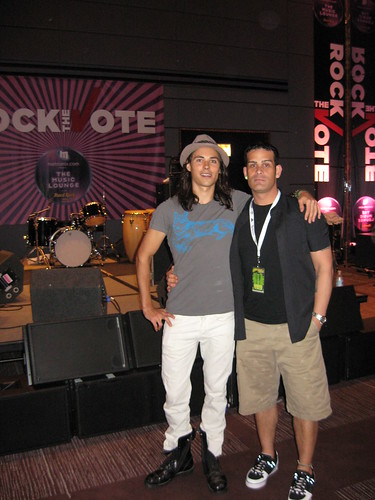

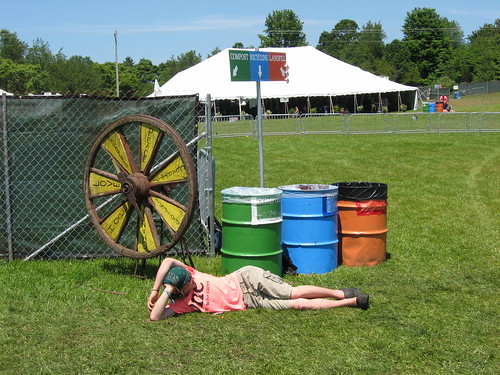
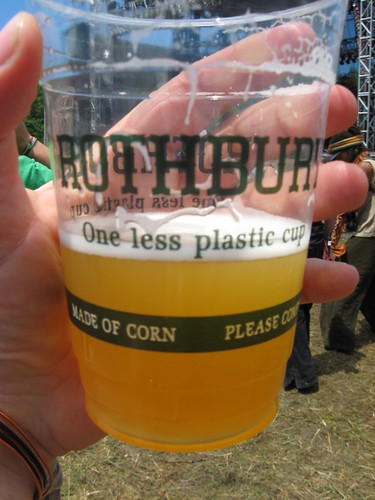
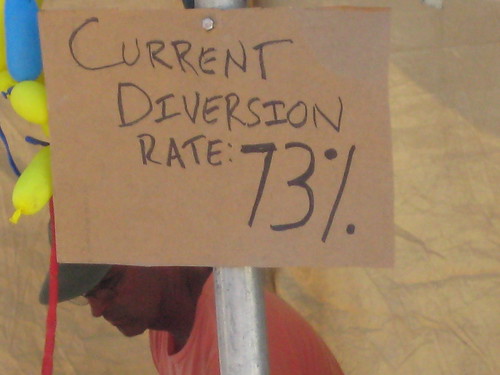

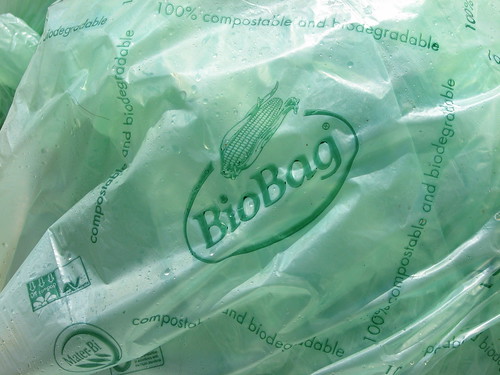
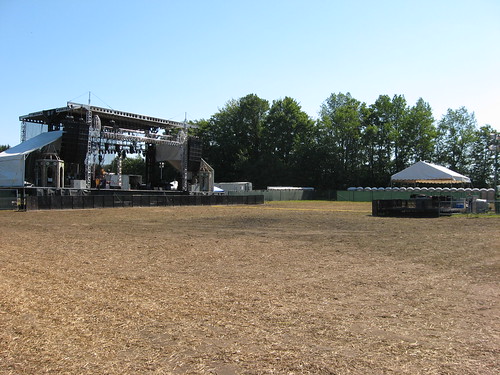
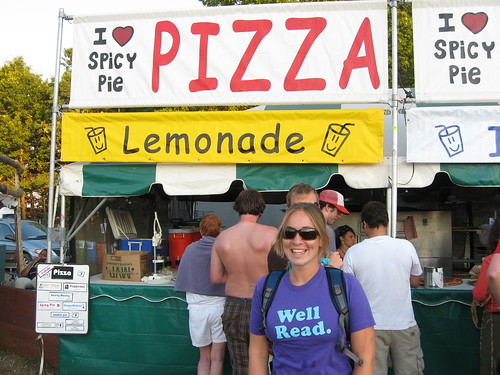
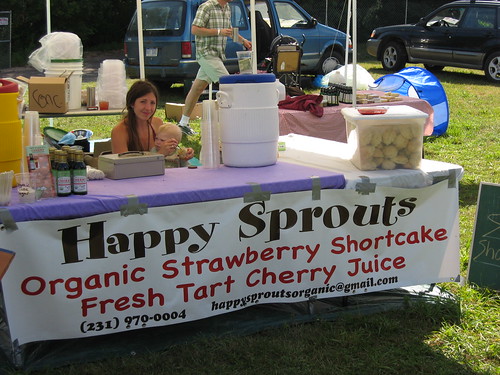
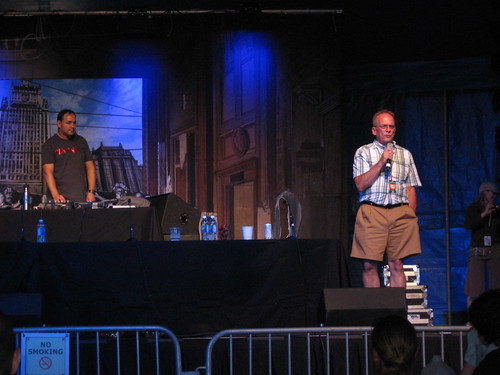
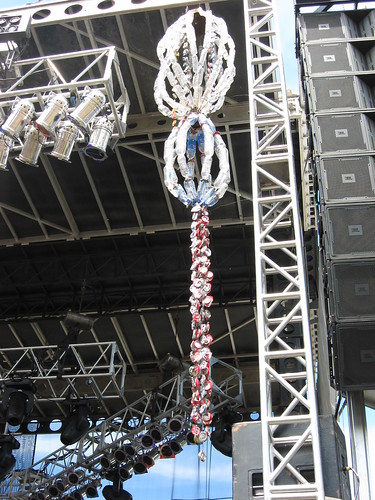

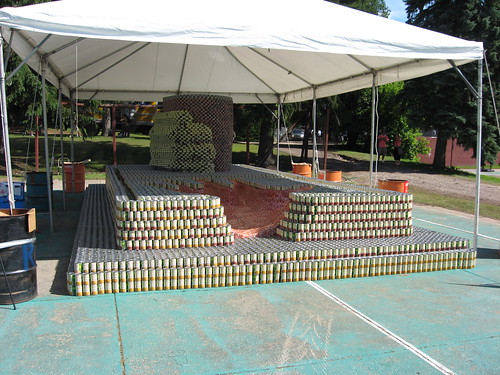
 LOHAS, an organization that focuses on how businesses and individuals are paving the future for healthier and environmentally friendly lifestyles, put out a report this week with a very interesting finding: consumers actually care about certification seals on products.
 On the first day of 2008, I was waxing poetic about a brilliant new bathtub that conserves water. Now in the first days of spring, it seems another vessel has captured my attention.